


24 Volt DC Hydraulic Power Unit—The Ultimate Guide
Looking for powerful and compact hydraulic power for your mobile devices?
The 24V DC hydraulic power unit is an integrated solution specifically designed for electric forklifts, AGVs, industrial robots and special equipment. It strikes the perfect balance between safety at low voltage, outstanding performance and ultimate compactness, directly driving your equipment innovation. Explore now and find the perfect power for your device.
What is a 24 Volt DC Hydraulic Power Unit?

The 24V DC hydraulic power unit is a highly integrated miniature hydraulic power unit. It integrates a DC motor, hydraulic pump, oil tank and control valve group into one, capable of converting 24V DC electrical energy into controllable hydraulic energy.
The Composition of a 24 Volt DC Hydraulic Power Unit
24V DC Motor

As the driving source of the device, the 24V DC motor converts electrical energy into mechanical energy and directly drives the hydraulic pump to operate. The permanent magnet DC motor, with its compact structure and efficient control performance, meets most application scenarios. For heavy-duty conditions, a series-excited motor with greater starting torque is selected to ensure that the equipment can start and operate strongly even under harsh conditions.
Hydraulic Pump

As the heart of the system, the hydraulic pump’s core mission is to efficiently convert the mechanical energy input from the motor into hydraulic energy. Through the cyclical processes of suction, pressurization, and discharge performed by its precision internal components, it establishes stable flow and pressure, providing the fundamental power source for the entire system.
To achieve optimal performance under various operating conditions, three mainstream pump types are commonly employed.
- Gear Pumps: Featuring robust construction, cost-effectiveness, and strong contamination resistance, they are the ideal choice for most medium-to-low pressure applications.
- Vane Pumps: Delivering smooth flow output and low noise levels, they provide gentler power for applications requiring precise control.
- Hydraulic Piston Pumps: Designed specifically for heavy-duty, high-demand conditions, they offer high volumetric efficiency and exceptional resistance to high pressures.
Hydraulic Oil Tank

The hydraulic reservoir not only stores hydraulic fluid but also serves to dissipate heat, separate air bubbles from the oil, and trap sediment and impurities. To ensure system cleanliness, an air filter is installed on the reservoir to prevent contaminants from entering with the air. An oil filter is also fitted within the system piping to continuously filter the fluid, which is crucial for ensuring the long-term reliable operation of the hydraulic pump and valve assembly.
Hydraulic Valve Group

The hydraulic valve group is an integrated valve manifold that contains three types of key valves: pressure valves, directional valves, and flow valves. The integrated valve block connects the valves in series through internal precision oil circuits, reducing the leakage points of distributed pipelines and shortening the oil flow path to improve response speed.
- Pressure valves (such as relief valves) act as safety valves, with set pressures typically 10% to 20% higher than the system operating pressure to prevent overpressure damage to the pump and cylinder.
- Directional valves (such as solenoid directional control valves) are used to control the oil flow path, enabling the extension/retraction and forward/reverse rotation of hydraulic actuators (cylinders/motors).
- Flow valves (such as speed control valves) are used to regulate the oil flow rate, precisely controlling the action speed. They can also withstand pressure fluctuations, ensuring speed stability with an error of ≤5%.
How does the 24 Volt DC Hydraulic Power Unit Work?

The core of the 24V DC hydraulic power unit is a step-by-step energy conversion process with precise control. This system begins with safe DC electrical energy and ultimately outputs controllable linear reciprocating mechanical energy. Its working process can be divided into three closely connected stages.
Conversion of Electrical Energy to Mechanical Energy
In the working process of the 24V DC hydraulic power device, the conversion of electrical energy to mechanical energy is the initial core step. When the device is connected to a 24V DC power supply and receives the action command, the current drives the built-in DC motor, generating rotational torque through electromagnetic action, which drives the motor rotor to rotate stably, converting electrical energy into mechanical energy.
The output shaft of the motor then passes through a coupling or is directly rigidly connected, transmitting the complete rotational mechanical energy to the hydraulic pump.
Conversion of Mechanical Energy to Hydraulic Energy
The high-speed rotating hydraulic pump draws hydraulic oil from the oil tank and, through the volume changes in its sealed chambers, delivers the oil at high pressure. At this point, the electrical energy has been successfully converted into the pressure energy and kinetic energy of the hydraulic oil. The high-pressure oil output by the pump is then sent to the hydraulic control valve group.
Distribution and Execution of Hydraulic Energy
The directional valves in the hydraulic valve group change the oil flow channels by moving the valve cores, controlling the flow of high-pressure oil to specific chambers of the actuating elements to switch the action direction. During this process, the relief valve ensures that the system pressure does not exceed the safety setting. The flow control valve regulates the oil flow rate to adjust the action speed and can withstand system pressure fluctuations to ensure a stable speed.
Finally, the hydraulic energy drives the cylinder to perform the required mechanical actions such as pushing, pulling, lifting, and raising. After completing the task, the oil on the other side of the cylinder is pushed back to the oil tank by the piston, guided by the directional valve, and awaits the next working cycle.
The Advantages of the 24 Volt DC Hydraulic Power Unit

Safety
The 24V voltage falls under the international standard of safe special low voltage (SELV), which is lower than the threshold of 36V for human safety voltage. Even in scenarios such as damp logistics warehouses or outdoor construction sites, if an operator accidentally touches the exposed electrodes, the current passing through the human body is only approximately 24mA (far below the lethal current of 50mA), effectively reducing the risk of electric shock. Meanwhile, the core components of the device generally adopt protection levels of IP54 or above, which can effectively prevent dust and water splashing.
Power Supply Compatibility is Strong
Currently, mobile equipment such as electric forklifts, trailers, and aerial work platforms commonly use a 24V power system consisting of two 12V batteries connected in series. The 24V DC hydraulic power unit can directly be connected to this power supply, without the need for additional configuration of transformers, inverters, and other conversion devices, significantly reducing the cost and complexity of equipment modification.
Cut Energy Costs and Extend Equipment Runtime
Most 24V DC hydraulic power units adopt permanent magnet DC motors, with efficiency reaching 85%-90%. Compared to traditional series-excited motors, it can save energy by 10%-15%. Combined with anti-pollution gear pumps or low-loss vane pumps, there is less hydraulic loss during energy conversion, especially in medium and high-load conditions, where the energy efficiency advantage is more obvious.
Solve Your Toughest Space Constraints
Most 24V DC hydraulic power units adopt an integrated design, with the overall volume being 40%-60% smaller than the decentralized system. The weight is generally controlled within 15kg (for example, the unit for small forklifts is only 8-10kg), and can be directly installed in narrow areas such as equipment frames and chassis, without the need to reserve a large space for a hydraulic station.
What Types of 24 Volt DC Hydraulic Power Units are there?

The 24V DC hydraulic power unit can be classified into several types based on its core components.
It can be divided into permanent magnet DC motor type and series-excited DC motor type.
- Permanent Magnet DC Motor Type
This type uses a DC motor with permanent magnets for excitation as the power source. The efficiency is up to 85%-90%, and the lifespan can exceed 5,000 hours. The permanent magnet motor is small in size and light in weight. You can install it in equipment with limited space. However, the permanent magnet material may demagnetize in high temperatures (>80℃) or strong vibrations, and a temperature protection device is required. It is suitable for indoor precision equipment or mobile machinery with high energy efficiency requirements.
- Series-Excited DC Motor Type
The starting torque of this type can reach 3-5 times the rated value, suitable for lifting, traction and other scenarios that require instantaneous high power. Its cost is lower than that of the permanent magnet motor, but the lifespan is about 2,000 hours and requires regular maintenance. It generates a lot of heat during high-speed operation and is suitable for intermittent operation.
Based on the type of core pump, it can be divided into gear pump type, vane pump type and piston pump type.
- The gear pump type is the most economical and widely used type. It has a simple and sturdy structure, strong pollution resistance, and high reliability. It is an ideal choice for medium and low pressure applications with cost-sensitive requirements.
- The vane pump type is known for its smooth operation, uniform flow and low noise. It has a high volumetric efficiency and is suitable for indoor or precision equipment with strict requirements for working environment noise.
- The piston pump type represents the high-performance category. It can withstand extremely high working pressures (up to 70 MPa or more), has high volumetric efficiency and is easy to achieve variable control, and is an inevitable choice for ultra-high pressure and applications requiring precise power regulation.
From the perspective of structural layout, it is mainly divided into compact type and split type.
- The compact power unit integrates the motor, pump, oil tank and valve group in a small and compact housing. Its greatest advantage is its small size, convenient installation and few external leakage points. Therefore, it is very suitable for applications with limited space, such as robot joints, automatic road posts and medical equipment.
- The split power unit separates the motor-pump unit from the oil tank, valve group and other components and places them separately. It is connected through pipelines. This layout has better heat dissipation performance, more flexible maintenance and function expansion, and is commonly found in large vehicles and fixed equipment with sufficient installation space or special layouts.
In terms of operation mode, it can be divided into single-acting type and double-acting type.
- The single-acting power unit is specifically designed for driving single-acting cylinders. The oil circuit and control valve group are simple, and the hydraulic-driven piston extends and retracts by relying on springs or load self-weight. The system cost is low.
- The double-acting type must be equipped with a two-position four-way reversing valve to actively drive the extension and retraction of the cylinder. Both directions of movement and output can be controlled, and it is powerful, suitable for precision equipment that requires bidirectional work.
How to Select an Appropriate 24 Volt DC Hydraulic Power Unit?

Clarify Core Performance Requirements
Firstly, you must precisely calculate or evaluate the three key parameters: working pressure, rated flow, and motor power to determine the appropriate motor. The working pressure depends on the actual load you need to overcome, but you must leave a 10%-20% safety margin on this basis. The rated flow determines the movement speed of the actuator and affects the efficiency of the equipment. The motor power is determined jointly by pressure and flow, and insufficient power will cause the system to fail to achieve the expected performance or even burn out the motor.
Selection of Control Mode
If your application only requires basic start-up, stop, and direction change of movement, the basic type power unit is the most cost-effective solution. It integrates the necessary start-up and direction-changing circuits, has a compact structure, is specifically designed for single, repetitive hydraulic actions, and can reliably complete tasks at the optimal cost.
If your process requires precise adjustment of the movement speed, such as achieving smooth slow start and stop in automated assembly, precision injection molding, or synchronous conveying, the speed-adjustable unit is the ideal choice. It achieves continuous regulation of the oil flow or motor speed by integrating components such as throttle valves, frequency converters, or variable pumps, thereby precisely controlling the speed of the actuator and ensuring smooth operation and process accuracy.
For high-end applications that require complex action sequences, sensor linkage, or access to the entire machine control network, you can choose the intelligent power unit with a PLC as the core control platform.
Consider Installation and Environmental Conditions
The available installation space of the equipment determines whether you should choose a highly integrated compact type or a more flexible split structure. At the same time, you also need to consider whether the equipment operates continuously or intermittently and the environmental temperature. For long-term continuous operation or in high-temperature environments, an oil cooler must be installed.
If the equipment is used outdoors or in dusty and humid environments, the protection level is a key indicator.
IP54 is suitable for most environments with dust and slight splashing water.
IP65/66 is suitable for outdoor equipment that may be washed by water or exposed to rain and snow.
IP67 can be briefly immersed in water.
For harsh environments such as mines or beaches, it is necessary to choose materials that are corrosion-resistant, such as stainless steel oil tanks and galvanized motor casings.
Explosion-proof environments require specialized certified products.
Selecting Action Mode
According to the working mode of the hydraulic actuator, you need to choose a single-acting type or a double-acting type power unit. If your hydraulic actuator only requires a unidirectional action and is returned by a spring or the equipment’s own weight, then the single-acting type is an economical and efficient choice.
The Application Fields of the 24 Volt DC Hydraulic Power Unit
In the Field of Logistics and Warehousing

In electric pallet trucks and reach trucks, the 24V DC hydraulic power unit provides the lifting power for the forks. The integrated design can be embedded in the narrow space of the forklift chassis. The double-acting circuit supports the rapid lifting and smooth lowering of the forks.
Self-unloading logistics trailers adopt a single-acting system. The cabin is lifted by the oil cylinder driven by a 24V motor, and the descent is achieved by the weight of the goods. The IP54 protection level can withstand the dust and rain in the logistics park, ensuring stable outdoor unloading operations.
In intelligent warehousing, the AGV unmanned handling vehicles also rely on the 24V micro-hydraulic unit to drive the top lifting platform. Its lightweight and low-energy consumption characteristics can meet the range requirements of AGVs, and it supports PLC integration to achieve precise docking with shelves (lifting error ≤ 5mm).
Construction Machinery and Special Vehicles

Scissor lift platforms utilize a 24V DC hydraulic power unit to extend/retract the boom and level the platform. The low-temperature resistant motor handles outdoor maintenance in northern winters, while the flexible coupling absorbs vehicle vibrations to prevent pump damage.
Compact truck-mounted cranes employ a 24V piston pump system to extend/retract the boom and adjust the swing angle. The 24V voltage draws directly from the vehicle battery without requiring additional power sources. Pressure sensors continuously monitor load conditions, automatically relieving pressure during overload situations to ensure operational safety.
Within emergency vehicles, it also powers automatic spare tire lifts and hydraulic rescue tools. Its explosion-proof design (Ex d IIB T4 Gb) adapts to challenging field environments, while wide voltage compatibility (18-36V) maintains functionality despite battery voltage fluctuations in low temperatures.
Industrial Automation

The hydraulic clamping fixture on the assembly line adjusts clamping force via a proportional valve to accommodate workpieces of varying materials. Its 24V signal interfaces directly with the PLC, enabling automated coordination of clamping, assembly, and release operations.
The compact hydraulic lift employs a 24V double-acting system. A hydraulically controlled check valve ensures platform locking during shutdown, preventing accidental descent when transporting fragile items.
Agriculture and Landscaping Fields

In small combine harvesters, the 24V system drives the cutter bar to rise and fall, adapting to the heights of different crops such as wheat and rice. The IP65 protection level can withstand field rain and dirt, and the anti-vibration design can cope with the bumps on muddy roads.
The suspension device of the tractor realizes the lifting and lowering of agricultural tools through a 24V single-acting system, directly connected to the 24V battery of the agricultural machinery, without the need for power modification. The manual directional valve is easy to operate and suitable for farmers to quickly master.
The hydraulic arm of the landscaping trimmer also relies on a 24V lightweight unit. With a small volume, it can be installed at the rear of the vehicle. The single-acting circuit supports the extension and rotation of the boom, meeting the precise trimming requirements of green belts and parks.
Medical and Disability Assistance Field
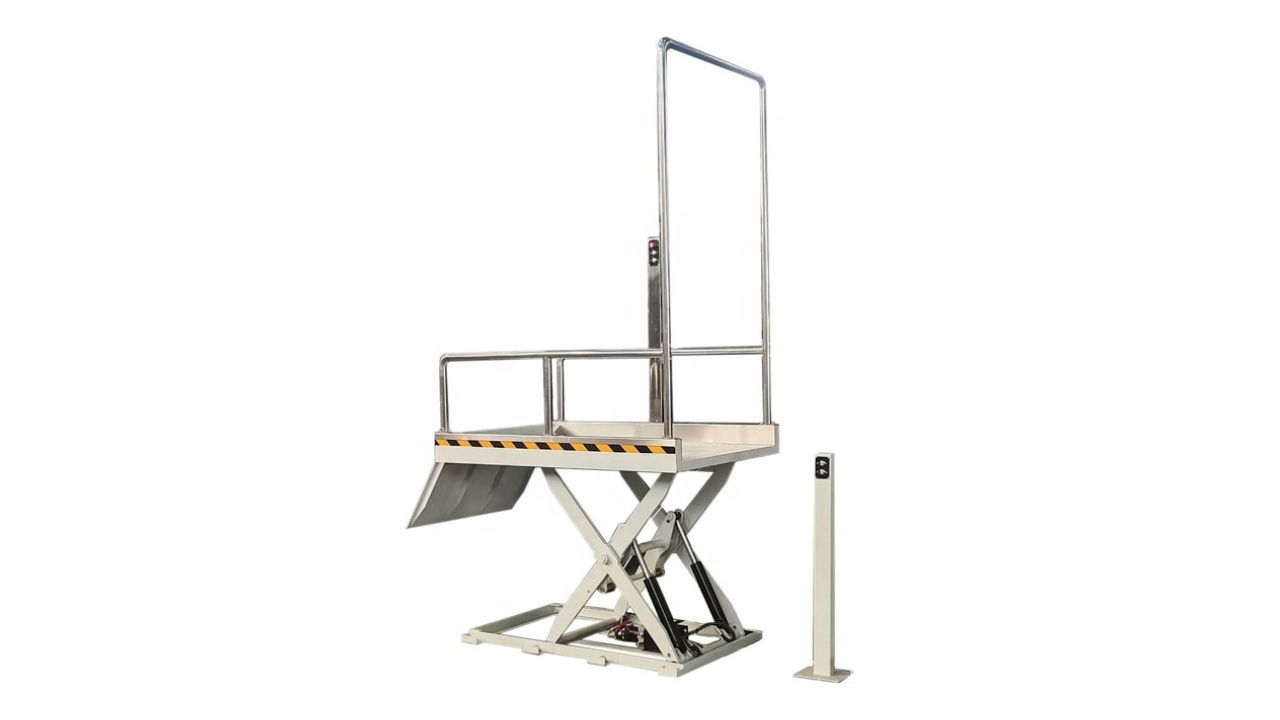
In home or public accessibility lifts for individuals with disabilities, the 24V system drives the platform’s vertical movement, assisting users in navigating stairs and transferring to/from vehicles. The 24V voltage eliminates electric shock hazards, while soft-start/soft-stop control prevents platform swaying.
The multifunctional medical bed utilizes a 24V system to adjust the backrest angle and leg height, meeting patients’ comfort needs for turning over and sitting up. The low-noise vane pump (≤55dB) ensures quiet operation that won’t disturb patient rest.
Emerging Fields
Warehouse picking robots and underwater exploration robots achieve precise cargo grasping through the flexible extension and rotation of their arm joints. For example, they can sort packages and parts on the shelves in the warehouse. For underwater operations, such as shallow sea pipeline inspection and underwater equipment maintenance.
The micro-integrated 24V system can be easily embedded within the joints of robots with extremely limited space, avoiding occupying too much body space. For the special working conditions of underwater exploration robots, the device is equipped with an IP68 level waterproof design, which can withstand underwater pressure and water erosion, ensuring stable operation in shallow seas or underwater environments that are humid or submerged.
Conclusion
Having read this far, we believe you have comprehensively understood how the 24V DC hydraulic power unit balances performance and space, while also considering safety and efficiency. So it’s time to transform this compact and safe hydraulic power into the competitive edge of your equipment. Next, based on your specific needs, whether it’s specific loads, space limitations, or unique control logic, we will provide you with a tailor-made solution.
The cleanliness of the oil is the primary factor.
The working cycle (avoid long-term overloading and continuous operation).
Environmental temperature (high temperature accelerates the aging of the oil and seals).
Power supply stability (excessive voltage fluctuations may damage the motor).
Hydraulic Oil: Regularly check oil level and condition, replace at recommended intervals, and maintain extremely high cleanliness at all times.
Filter Elements: Replace suction and return filters strictly according to indicator alerts or recommended replacement cycles.
Electrical Connections: Periodically inspect power cables and connectors for tightness and insulation integrity.
Initial Start-up: Ensure all air is purged from the system and follow the correct start-up procedure.
When the equipment weight exceeds 15kg, it is necessary to match vibration isolators to reduce vibration transmission and avoid misalignment of the pump body and motor.
The pressure grade of the high-pressure hose needs to be higher than the system pressure by 20%, the joint needs to be coated with sealant and tightened diagonally to prevent leakage.
The cross-sectional area of the cable needs to match the motor current (such as a 2kW motor selects 2.5mm² copper wire), it must be grounded separately (grounding resistance ≤ 4Ω), and avoid electromagnetic interference.
According to the power formula (P=VI), when delivering the same power output, a 24V DC hydraulic power unit requires only half the operating current of a 12V DC hydraulic power unit. This fundamental difference triggers a series of chain reactions.
You can make a quick comparison based on the following table.
| Comparison Dimension | 12V | 24V |
| Voltage | Low | Higher |
| Current | High | Lowe |
| Power Range | Lower(0.2—1.5kW) | Wider(0.5—4kW+) |
| Line Loss | High | Low |
| Transmission Distance | Short | Long |
| Cable | Thick | Thin |
| Connector Clip | High Current | Standard |
12V devices are typically suitable for scenarios with lower power requirements and short-term or intermittent operation.
24V devices are better suited for applications requiring continuous operation, higher power output, or longer wiring.