


Hydraulic seals are common components in hydraulic systems. This article will explain what they are, how they work and the different types. It will also teach you how to choose the right hydraulic seals.
What Are Hydraulic Seals?
Hydraulic seals are parts that are used to seal hydraulic systems. They have four main jobs:
- It stops hydraulic fluid from leaking.
- It stops dust and moisture from entering the hydraulic system.
- It helps to transmit power through the hydraulic fluid.
- It makes it easier for the moving parts to slide against each other.
Hydraulic seals are used in hydraulic systems to make sure they work safely and efficiently, and prevent accidents.
What Are The Types of Hydraulic Seals?
Classified by Sealing Materials:
HNBR
Features:
High temperature resistance: It can withstand temperatures of up to 150°C.
Great oil resistance: It doesn’t rust or dissolve in oil as normal rubber does.
Excellent aging resistance: It is resistant to oxidation, ultraviolet radiation, and ozone, so it does not age easily.
Good wear resistance: It is strong and does not wear easily.
Typical Uses:
Piston and oil seals for petroleum, natural gas, cars, and mechanical equipment.
Viton
Features:
High temperature resistance: It can withstand temperatures of up to 250°C.
Strong chemical resistance: It is resistant to acid and alkali corrosion, and dissolves in organic solvents.
Excellent aging resistance: It is strong and can resist ultraviolet rays and ozone. It will last a long time.
Good elasticity: It will stay stretchy even when it’s very hot.
Typical Uses:
Sealing, valve seals, and oil seals in automotive, chemical, and petroleum industries.
NBR
Features:
Oil resistance: It resists petroleum products, hydraulic fluids, and fuels.
Wear resistance: It resists friction and is suitable for dynamic sealing applications.
Wide temperature range: The temperature range that it can withstand is between -30°C and +100°C.
Aging resistance: It does not last very long and is sensitive to ozone.
Typical Uses:
Sealing of oil-based media in the automotive industry, hydraulic systems, and mechanical equipment.
PTFE
Features:
Strong chemical resistance: It won’t rust or corrode in most chemicals.
High temperature resistance: It can operate stably in a temperature range of -200°C to +260°C.
Low friction: It has a very low friction coefficient. You can use it for dynamic sealing.
Non-stick: It doesn’t stick easily to contaminants.
Typical Uses:
Sealing, valves, and piping in the chemical, pharmaceutical, and food industries.
PU
Features:
Excellent wear resistance: It doesn’t wear easily and can take a lot of weight.
Good elasticity: It can be stretched and is strong enough to deal with big changes in pressure.
Strong oil resistance: It won’t rust or dissolve in oil or lubricants.
Compression resistant: It can be squashed without breaking and keeps its shape.
Typical Uses:
Dynamic sealing in machines used in industry, building sites and cars, such as piston seals and rod seals.
EPDM
Features:
Excellent weather resistance: It works well in the sun.
Good water resistance: It won’t be damaged or deformed when it comes into contact with water or steam.
High temperature resistance: It can withstand temperatures of approximately 150°C.
Strong chemical resistance: It is resistant to acids and alkalis, but it can be easily dissolved in organic solvents.
Typical Uses:
Sealing for water pipes, steam systems, and air conditioning systems.
Classified by The Purpose of The Seal:
Static Seals
Principle:
If you have two stationary parts that are closely connected, the static seal is compressed, which creates a seal that stops fluid from leaking.
Typical Uses:
Pipes, equipment joints, flanges, end caps, and other similar locations.
Benefits:
It’s simple, reliable, easy to install, and it works really well.
Limitations:
It is only suitable for stationary parts, not moving parts.
Dynamic Seals
Principle:
Dynamic seals form a seal by touching parts such as pistons and rods. They can handle pressure changes and stop liquid or gas from leaking.
Typical Uses:
They are used to seal parts of machines that use hydraulics, like hydraulic cylinders, hydraulic pumps and hydraulic pistons.
Benefits:
It can be used in high-pressure and dynamic environments, effectively preventing liquid leakage.
Limitations:
It needs to be installed very precisely. It is also sensitive to heat and pressure, and it doesn’t last as long.
Rotary Seals
Principle:
Rotary seals are used to stop liquids or gases from leaking. They work through friction to create a seal between the rotating seal and the rotating component.
Typical Uses:
They are used in parts like hydraulic pumps, hydraulic motors, and rotating shafts.
Benefits:
It can handle moving parts that are spinning, so it’s great for rotating equipment.
Limitations:
If there is too much friction, they will wear out quickly.
Oscillating Seals
Principle:
Oscillating seals can keep on sealing by resisting shaking or periodic movement, stopping fluid from leaking out.
Typical Uses:
They are used in equipment such as hydraulic excavator arms and hydraulic tools that swing or move regularly.
Benefits:
It is suitable for high-load, periodic motion applications.
Limitations:
It needs precise control of movement, can wear out easily, and requires the right materials and design.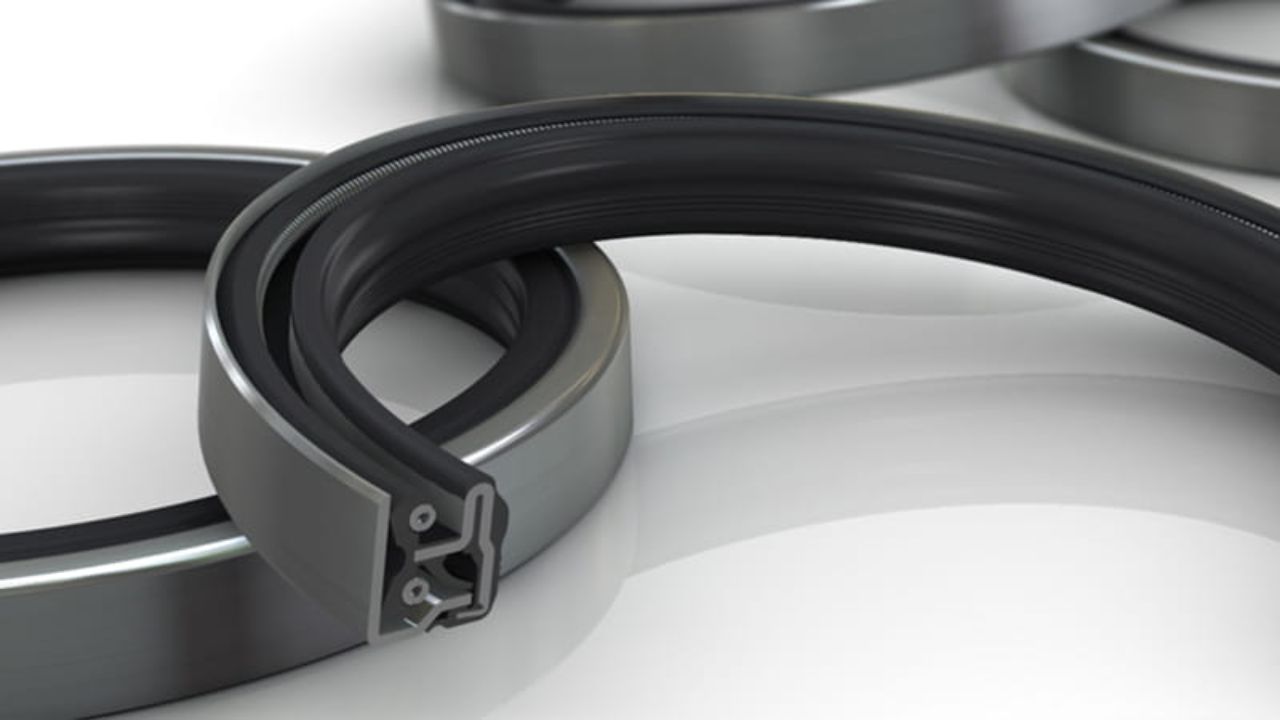
Bearing Seals
Principle:
Bearing seals are used to stop dirt and other things from getting into the bearing by keeping it all close together. They also stop lubricant from leaking, which protects the bearing from getting dirty.
Typical Uses:
They are used in parts of engines, such as electric motors, pumps, and rotating shafts and bearings in vehicle hubs.
Benefits:
Keeps out dirt and other things that could damage the bearing, so it will last longer.
Limitations:
It can make the bearing get hot and wear out. As the bearing wears down, the sealing effect may also get worse.
Dust Seals
Principle:
Dust seals form a barrier by making close contact with the equipment surface, using friction to stop contaminants from entering the sealing system.
Typical Uses:
They are used in equipment such as hydraulic arms and cylinders in excavators and construction machinery.
Benefits:
It stops dust, dirt, and other things from getting into the equipment and protects the inside of it.
Limitations:
It doesn’t provide a complete seal and usually needs to be used with other sealing components.
Classified by Design Type:
O-Ring
Structural Features:
O-rings are circular and are usually manufactured from rubber or other stretchy materials.
Working Principle:
When the surfaces of the seals and hydraulic components touch each other, liquid leakage can be prevented.
Typical Uses:
They’re used for pipe joints, valve seals, hydraulic cylinders and other parts.
Benefits:
It has a simple structure, is low-cost, easy to install, and performs well at sealing.
Limitations:
It will get damaged by liquid spills and changes in temperature.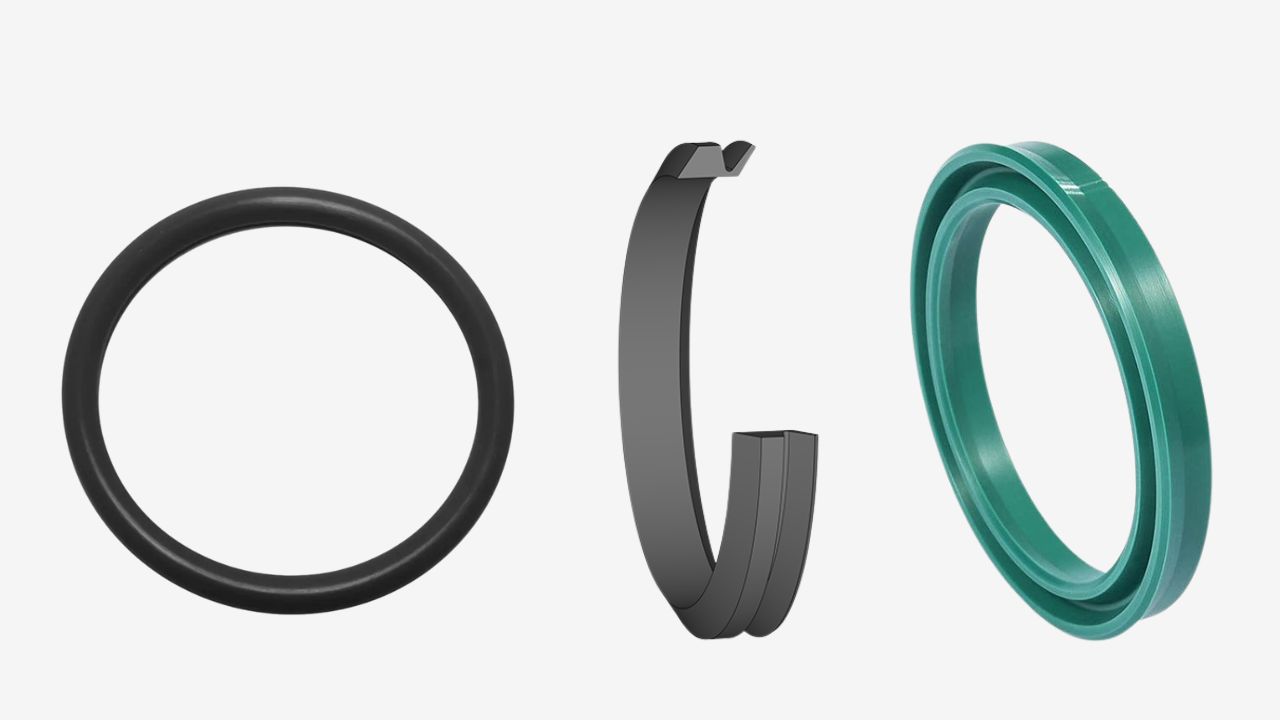
V-Ring
Structural Features:
V-ring seals have a “V” shaped cross-section and keep an elastic seal in dynamic environments.
Working Principle:
When the seal is put onto a component surface, the V-shaped design creates a good seal under pressure. This stops fluid from leaking while also dealing with a certain amount of rubbing.
Typical Uses:
They are often used to seal things like hydraulic pistons, rod seals and rotating shafts.
Benefits:
It works well in noisy places and can deal with high pressures.
Limitations:
It needs to be installed very precisely. If it is not installed properly, it will not seal well.
U-Cup
Structural Features:
A U-shaped seal looks like the letter “U” when cut through, and is made of something stretchy that can be used in dynamic environments.
Working Principle:
The U-shaped seal, with its “U” shape and stretchy properties, forms a seal when it is pressed, stopping fluid from leaking out.
Typical Uses:
It is good for use in dynamic systems that need a high level of sealing performance, such as hydraulic cylinders and piston rods.
Benefits:
It is easy to install and will last for years.
Limitations:
It’s not good for places where it gets very hot or very cold. It can also wear out easily.
How to choose the right hydraulic seals?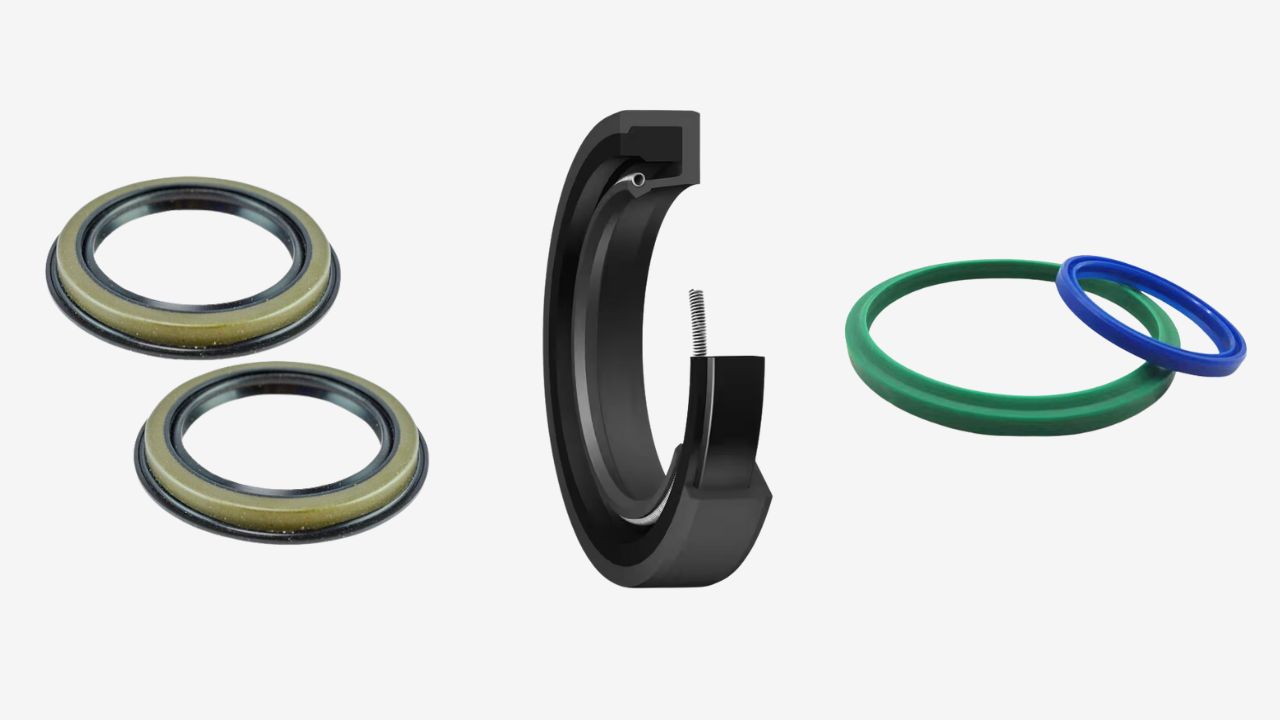
Here are six things you can think about:
Working Medium
If the working medium is mineral oil or synthetic hydraulic fluid, you can use materials with good oil resistance, such as NBR.
If the hydraulic system uses liquids that can rust or contain strong acids or bases, it is recommended to choose seals that can resist these chemicals better, such as PTFE.
Operating Temperature
If your system is in a place where it is very hot (above 100°C), you should choose sealing materials that can resist high temperatures, such as Viton or HNBR. These materials can resist high temperatures and still be stretchy.
For very cold environments (below -30°C), you can choose materials that stay flexible at low temperatures, such as NBR or EPDM. This stops the material from hardening or losing its sealing effectiveness.
Working Pressure
If your hydraulic system is a high-pressure system, you should choose sealing materials that can withstand high pressure, such as Viton or HNBR.
For most low-to-medium pressure systems, NBR seals are enough.
Type of Motion
For static seals (such as pipe connections, flange seals, etc.), you can choose simple and efficient O-rings or flat gaskets.
For dynamic seals (such as piston seals or piston rod seals in hydraulic cylinders), you need to choose materials with good wear resistance and elasticity, such as U-seals and V-seals.
Installation and Usage Environment
If the seal needs to work well in a small space, you can choose an O-ring. This type of seal is easy to put in and is good for tight spaces.
If there are contaminants in the working environment, you may need a dust-proof seal (such as a W-type seal). This can effectively stop external contaminants from entering the sealing system.
Vibration and Shock
If the hydraulic system vibrates or shakes a lot, you need to choose seals that can stretch and be shocked without breaking, like U-ring or V-ring seals.
Also, using materials that can resist wear and tear (like PU) can reduce wear caused by vibration and shock.
FAQ
What’s the difference between dynamic and static seals?
Dynamic seals are used to deal with movement between parts, like the seals in hydraulic pistons and piston rods. They need to stop fluid from leaking and deal with the changes in friction and pressure caused by movement.
Static seals are used between stationary parts, such as pipe connections and flange seals. They just need to stop fluid from leaking, and they don’t need to be able to move.
Do hydraulic seals affect how well a hydraulic system works?
Yes, if the seals are not right, they can cause leaks, reduce pressure and affect how well the hydraulic system works.
What can you do to stop hydraulic seals from sealing incorrectly?
Please do the following:
Don’t over-compress the seals.
Choose the right sealing material for the medium, temperature and pressure.
Make sure you clean the system regularly to stop dust and dirt from getting in.
When you are installing it, make sure the seal is lined up properly so that it doesn’t get damaged.
Are there any standards to maintain hydraulic seals regularly?
Yes, hydraulic seals need to be checked regularly.
Make sure there are no leaks around the seals.
Look for signs that it is wearing out, has cracks or is old.
Make sure you clean the hydraulic system regularly.
Final Thoughts
Hydraulic seals are very important parts of hydraulic systems. If you choose and use the right seals, you can stop leaks and wear and tear, and make the system more efficient and stable. Target Hydraulics has over 10 years of experience in hydraulic seal design and sales. We can help you choose the right seal, change them to fit your needs, and provide expert advice. If you need to improve the performance of your hydraulic system and equipment, just contact us.


